

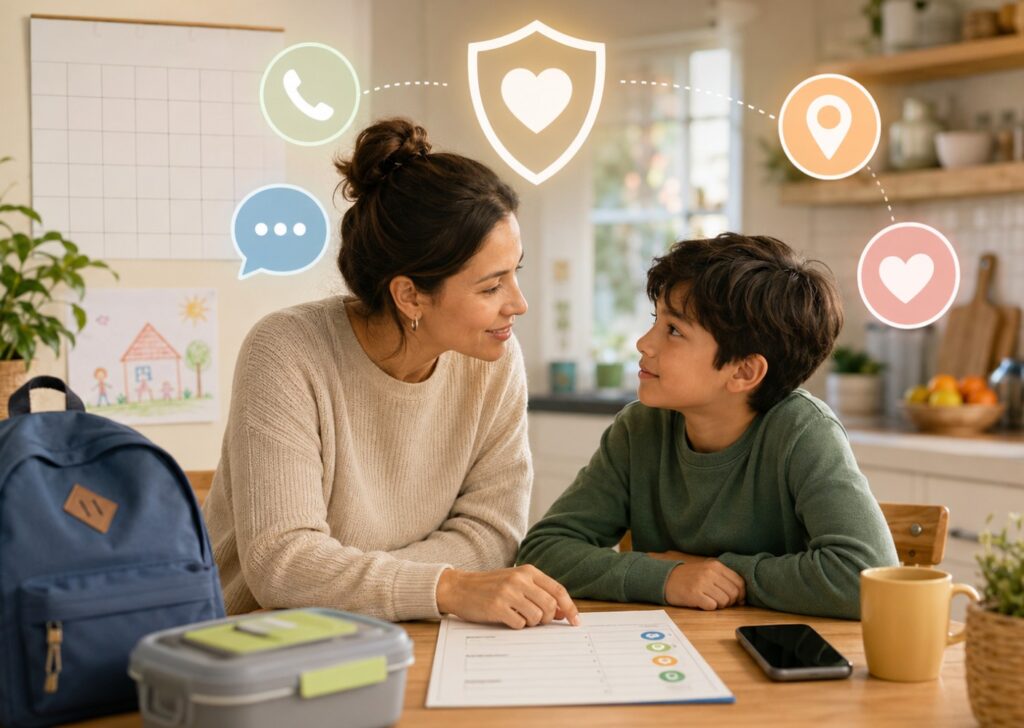
Child Safety Week 2026: Planning Communication
Child Safety Week is here again, running from Monday 1 June to Sunday 7 June 2026, and this year’s theme from the Child Accident Prevention Trust is one of the most useful the campaign has ever chosen.
Making Prevention Possible is built on a simple, refreshing idea. Most child safety advice fails not because parents do not care, but because it asks too much. Families are busy, attention is finite, and a campaign that presents a long list of perfect behaviours quickly becomes a campaign nobody can act on.
So this year, CAPT is focusing on small, manageable changes that genuinely reduce risk, without making families feel they need to overhaul their lives. It is a generous, realistic message, and it deserves to land.
We want to add one quiet thought to the conversation. Alongside the brilliant work CAPT does on roads, water, burns, choking and poisoning, there is another kind of everyday prevention worth talking about. The one that decides what happens when a child cannot reach a parent.
Communication Is a Safety Topic Too
Ask most parents to name child safety risks and they will reach for the obvious ones, traffic, falls, water, hot drinks, choking. All of them matter. All of them are well covered in this year’s campaign.
But the thing parents most often worry about in the moment, the thing they think about every time they wave a child off to school or let them walk to a friend’s house, is something simpler. It is the question of whether their child can reach them if something goes wrong.
That is a safety topic. It belongs in the same conversation as cycle helmets and stair gates. And like every other safety topic, the most useful approach is preventative, with small, manageable steps taken in advance rather than scrambling in the moment.
Small Steps That Make a Big Difference
In the spirit of Making Prevention Possible, here are some easy wins that any family can build into the next few weeks. None of them require a single major change. Together, they make a noticeable difference to a child’s ability to reach a trusted adult.
Agree a meeting point before you go anywhere busy.
Before you walk into a shopping centre, a station, a theme park or a festival, take ten seconds to point at something obvious and say, if we get separated, come back here. The conversation alone makes children calmer and more confident in crowds.
Make sure your child knows the name of one trusted adult they can ask for help.
Lost children do best when they have a clear, simple instruction. Find a parent with a pushchair. Ask a member of staff in uniform. Look for a police officer. Keep it specific and rehearsed.
Make it easy for your child to reach you, even without their own phone.
Most children today cannot recall a single parent’s mobile number from memory, and even an older child with a phone can be caught out by a flat battery or a lost handset. The most reliable safety habit a family can build is making sure a child can reach a trusted adult in those moments, whether by knowing where to find help, who to ask, or which device they can borrow.
Talk about what to do if their phone is gone.
Not in a worrying way, just as part of normal conversation. What would you do? Who would you ask? Where would you go? Children who have thought about this in advance handle the situation far better than those who have not.
Have a backup plan that does not depend on their phone.
A child’s safety should never rely on a single point of failure. If their phone is lost, stolen, flat or simply left behind, there should still be a way for them to reach you. Make sure that backup exists, and that they know what it is. This is exactly the gap My Home Call was built to fill, giving a child the ability to reach their saved contacts from any borrowed device when their own phone is not with them.
Prevention Is What Stops the Moment Becoming a Crisis
The best thing about CAPT’s framing this year is that it shifts the goal. The aim is not for parents to be perfect. The aim is for families to be slightly better prepared than they were last week.
That principle works just as well for communication as it does for choking hazards or seat belts. A child who has rehearsed what to do if they get lost, who knows a meeting point, who knows how to find a trusted adult, and who has a reliable backup for the moments their phone is not with them, is a child who handles a difficult moment with confidence rather than panic.
None of these steps is heroic. They are the small habits that turn a frightening situation into a manageable one. And that is exactly what prevention looks like.
Where My Home Call Fits
My Home Call is a biometric safety platform that gives children a way to reach their saved contacts from any borrowed device, even when their own phone is lost, flat or not with them. It is not a replacement for any of the habits above. It is the layer underneath them, the backup that works when memory and the phone both fail.
For families thinking about communication preparedness this Child Safety Week, it is a small, manageable step worth knowing about. In the spirit of the campaign, the kind of change you can make once and benefit from every day after.
About My Home Call
My Home Call is a UK-built biometric safety platform. Any registered account holder, on a free or paid plan, can reach their saved contacts from any borrowed device, without needing their own phone, without remembering numbers, and without exposing personal contact details. Messages are sent as a text directly to the contact’s mobile, so there is no app for the person receiving the message to download.
It works wherever another device is within reach, giving children and families a secure way to reach home when their own phone is lost, flat, forgotten, or simply not allowed.